Effort and models
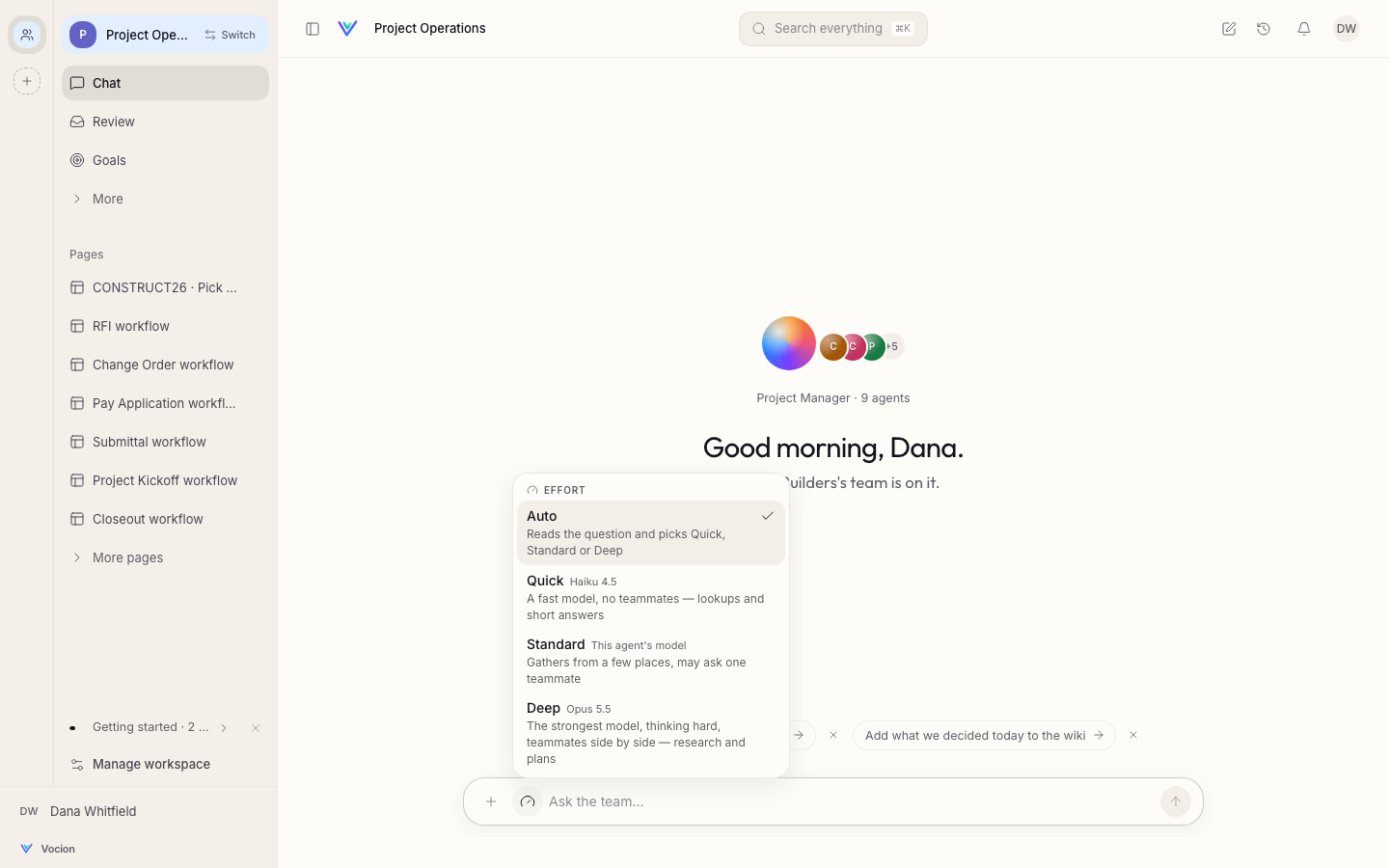
One control sets how hard a turn works and which model does the work. Every answer says which model it ran on.
The three levels
| Level | Model | Thinking | Teammates | Good for |
|---|---|---|---|---|
| Quick | the fast model (Haiku 4.5) | off | none | lookups, "did they reply", a date or a number |
| Standard | the agent's own model | the agent's own | one | most questions and drafts |
| Deep | the strongest model (Opus 5.5) | high | several, side by side | research, plans, ranking many items, anything risky |
Each level has a soft time target the agent works toward and two hard ceilings, time and spend. At a ceiling the turn answers with what it has, and you can pick Dig deeper to ask again one level up.
Who picks
- You, per message. The effort gauge in the composer. Each level shows the model it runs on.
- Auto, otherwise. A small model reads the request and picks the level, so a quick question stays quick and a plan gets the strongest model without you choosing. Auto never picks Quick for a turn that drafts something you will send or checks two or more systems; those run at Standard or above.
- An agent or workspace can set a default (
harness.turnEffort,defaults.turnEffort).
Every answer names its model
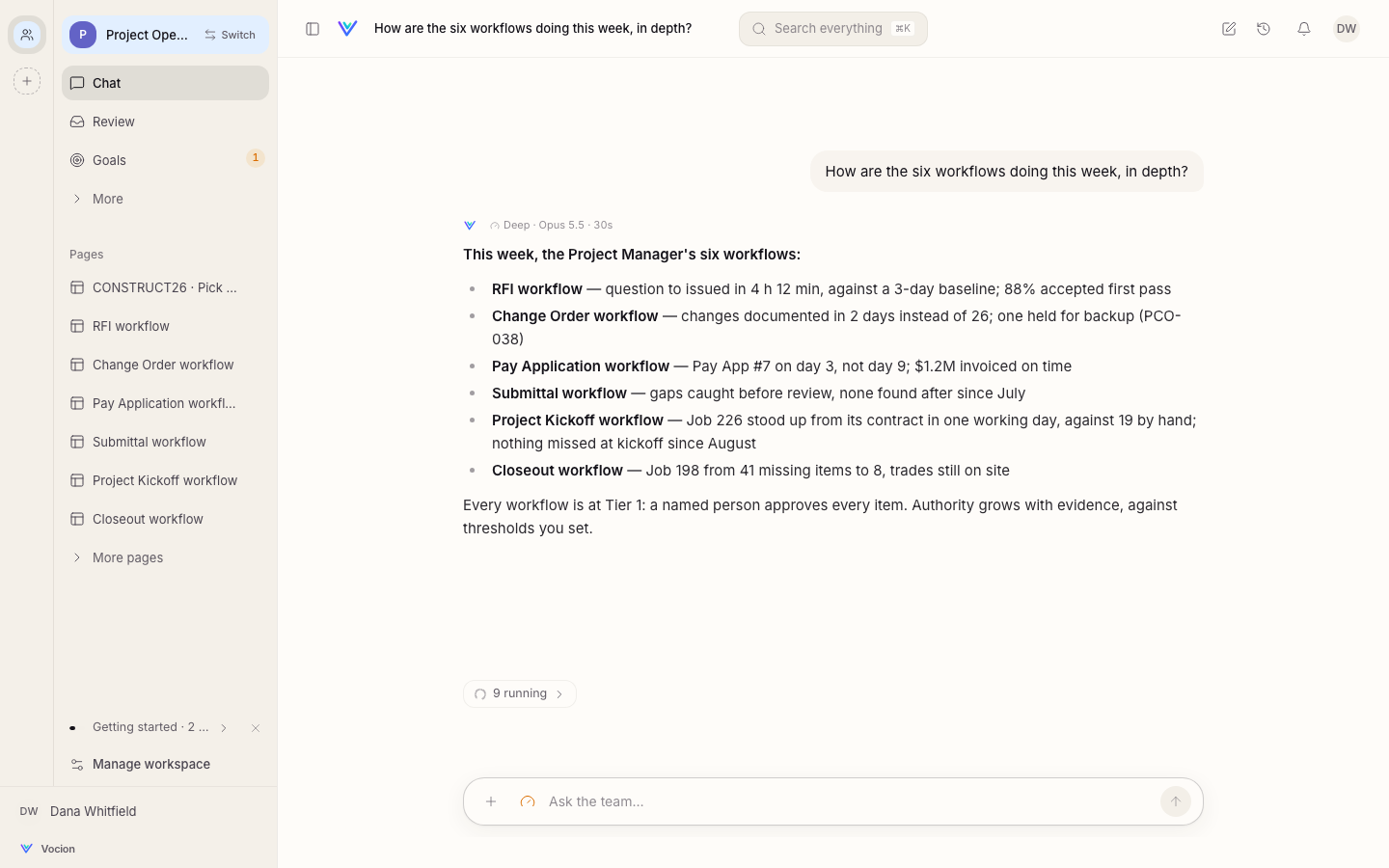
The line under an answer reads like Deep · Opus 5.5 · 30s: the level, the model the turn actually ran on, and how long it took. The same choice is on the turn's trace.
For operators
- Standard never changes the model. An agent pinned to a model in YAML (
harness.model) runs on it at Standard. - On OpenAI the fast and strongest models are
gpt-4o-miniandgpt-4o. On Bedrock they are the Haiku and Opus inference profiles. - Repoint either without code:
VOCION_MODEL_FAST_<PROVIDER>andVOCION_MODEL_DEEP_<PROVIDER>, for exampleVOCION_MODEL_DEEP_ANTHROPIC. - Missions, automations and evals run on the agent's own model.